How the US and Israel Managed To Surprise Iran
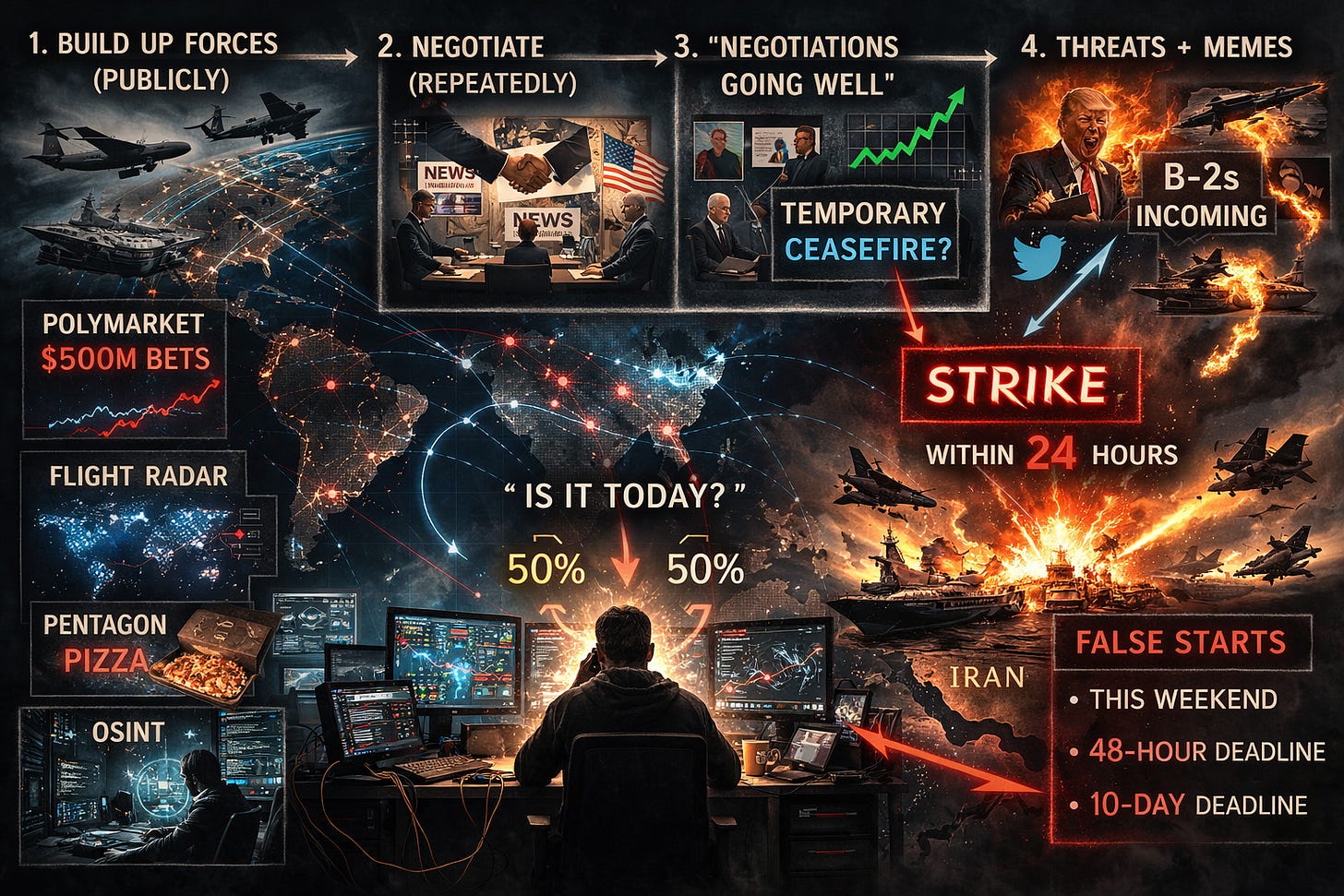
The buildup towards this latest war with Iran was monumental. The US spent months gathering forces, hundreds of planes bringing supplies and munitions over a period of two months. Two aircraft carriers coming in. F-22 Raptors, a fleet of refueling planes stationed pretty much EVERYWHERE the US has an airbase.
This isn’t the first war in the Middle East with modern weapons. We had Desert Storm. We had Afghanistan.
The difference is that this time, we have a mature (and AI-powered) internet, and so, everything was done out in the open.
News outlets, blogs, private Telegram groups, social networks, FlightRadar, OSINT sources, vibe-coded “When war?” dashboards, Pentagon pizza trackers.
Most importantly, POLYMARKET and $500m-$1b bets placed on when the war starts, gluing millions of eyeballs with an appetite for an “easy money”, trying to read the situation and place an appropriate bet.
And STILL, the Iranians (and everybody else) were surprised! How did the US and Israel achieve this?
Ok, I won’t lie, I tried to make a buck on this war too. I noticed the “near-attack” in January, and almost lost money on that. I spent days trying to figure out what the hell all sides were doing: Are they going to sign a deal, or is this war inevitable?
On the one hand you had a historic buildup of military hardware, munitions, and manpower. There was, in my mind, no way that all of this buildup would be for nothing.
On the other, you had the Iranians publicly doubting that the US will dare to attack, along with Trump constantly appearing to push for diplomacy, as well as a million content pieces about how this war won’t break out due to the potential economic downside and Trump’s own base being against it.
And what did they end up doing?
After many “maybe tonight” false alarms, three rounds of failed negotiations, a massive armada stationed here, both sides declared that despite the gaps, negotiations were actually going well, and a future negotiation date and place will be announced shortly.
Just then, Mark Rubio announced that he will postpone his visit by two days, and then Mike Huckabee (US ambassador to Israel) politely asked any citizens still in Israel to leave TODAY, and within 24 hours, the war started.
How did I feel? Did I bet on Polymarket? Honestly, I felt 50/50. After so many false alarms, false negotiations, it felt like this situation could easily last another month.
And that’s why I call this psyops a success.
tl;dr how to not telegraph an obvious war?
-
Gather your forces in public. Show ALL of your planes on FlightRadar. Scare the shit out of everyone.
-
Announce that you want to negotiate, that you want to sign a deal. Actually negotiate, many times.
-
Say that the negotiations are going well, generally speaking.
-
Threaten the enemy on X! Use AI memes! Scary Trump. US bombers incoming.
-
Plant a few “false starts”. “This weekend”. “48-hour deadline”. “10-day deadline”.
Goal: Complete confusion. You aim for a 50/50 feeling of “is it today?”. Then you strike.
Crazy.
But why am I writing you about this? What are the takeaways?
If you’re trading geopolitics on Polymarket, be careful. All sides are trying to fool all sides, all the time. Your head will be spinning, even if you happen to have the best non-insider info sources.
All the big players, whether it’s military, politics, finances, or tech, have learned how to manipulate public opinion online.
If you are on X, or anywhere else for that matter, you are being fooled. Even if you think YOU personally are clever, trust me, you are being fooled by everyone. Be careful. Read less “content”.
Maybe follow my “numbers only” method: Consume info in numeric form only. Stock prices, Polymarket odds, unemployment rate, inflation rate… Everything you need to know, everything you CAN know with ANY degree of confidence, is already baked into the price.
P.s. I hope it all ends well.